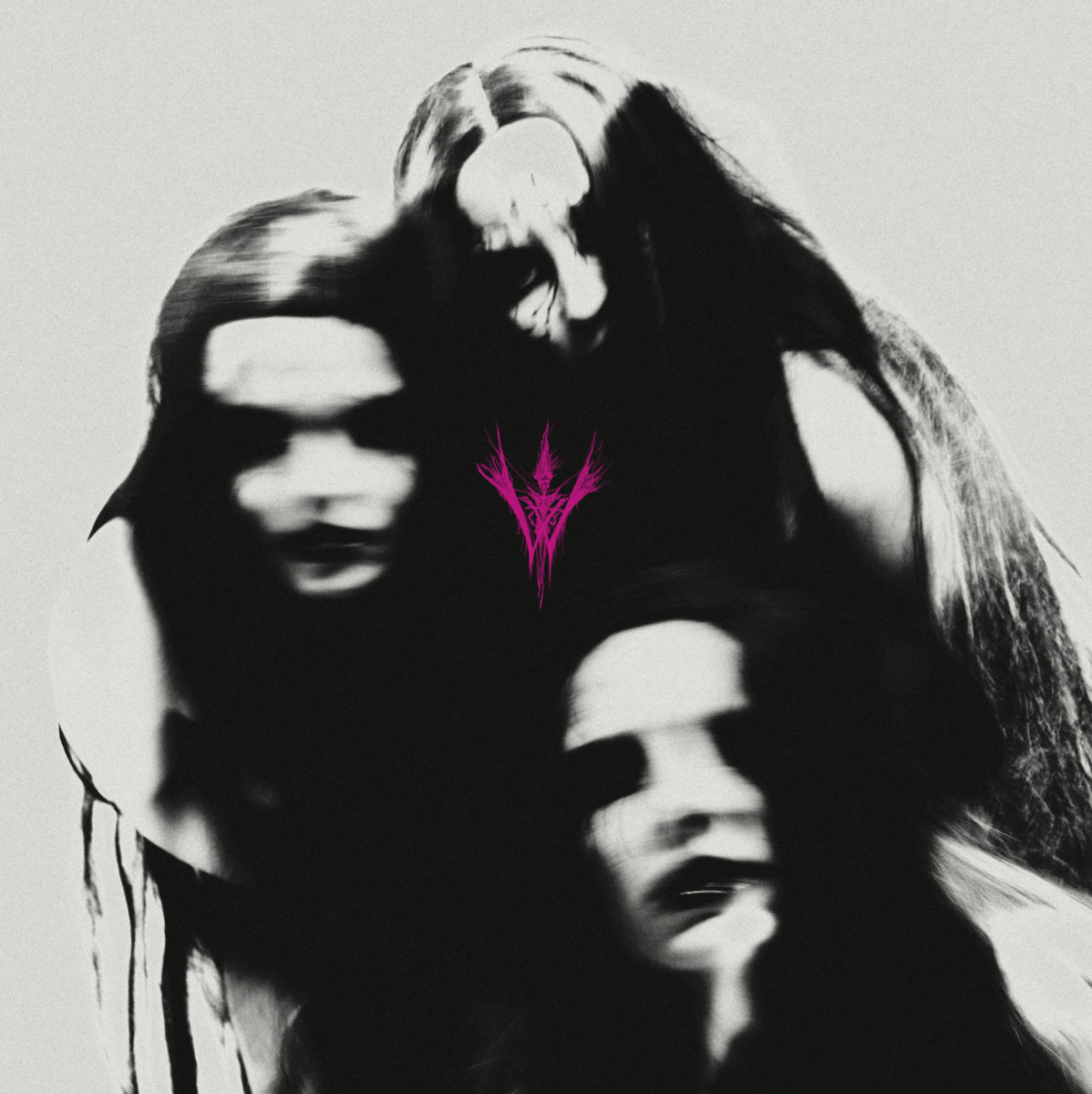
An image buried below the fold of Sydney Opera House’s What’s On newsletter caught my eye. So much so that I clicked the link and was only further intrigued by the one word next to the image. HEX.
One image. One word. A new discovery: Witch Club Satan.
While the band’s name sounds like it was named by a band of misfit children who threw in their favourite anti-establishment ideas and decided it should be a club, it is somehow a perfect name for the trio of women from Norway who established the black metal band.
Far from being misfit children, Johanna Holt Kleive, Nikoline Spjelkavik, and Victoria Røising met in theatre school and decided to take their various backgrounds ranging from arts to theatre to literature and beyond, and turn them into something more. During the pandemic when the world fell silent, the trio felt an urge to wake up, and by wake up, I mean wake up screaming. Perhaps the most obvious and easiest choice was to channel that urgency and need for screaming into music, but there was a problem, the three women didn’t know how to play instruments.
While that has not stopped any mediocre man from forming a band or creating music, I’d argue it allowed the trio to chart their own course and carve their own path. Not just creatively, but musically as well. Johanna had some percussion experience, while Nikoline and Victoria had only grown up listening to black and extreme metal, but this lack of knowledge only fueled their fire. Witch Club Satan taught themselves how to play.
With nothing to prove and everything to gain, Witch Club Satan entered the male-dominated black genre not with a whimper but with a scream with their debut single “Hysteria”.
On the song, the trio said,
“It is an homage to female aggression and a wake up call for the witches.”
And what a wake up call it was. Technical perfection was not needed nor required. “Hysteria” was elegant, tight, and a stamp, or rather a statement of ready or not, here the fuck we are.
Following “Hysteria”, came “Solace Sisters” which further established the band’s roots. I won’t say it established their sound because their third single, “Blod”, in my opinion musically swerves more into an experimental and slightly industrial sound. They avoid the proverbial box black metal prefers to sit in and the rules it likes to adhere to. While the distinct visceral and guttural vocals are alive and well, the music feels like the band is playing, world-building, and experimenting with what their sound can become.
Their self titled 2024 release opens with a scream. Perhaps the same scream that called the trio to form the band. Across the twelve songs, Witch Club Satan is fearless in their approach, be it title, lyrics, or music. Raw and primitive moments like “Fresh Blood, Fresh Pussy” sit alongside moments of unexpected grace like “Steilneset” and “Mother Sea”.
In between the two spectrums, the trio also turns moments of violent noise into sacred notes. They don’t pile chaos on top of chaos for the sake of it, and the band seems fully aware that brutality isn’t the only emotional setting available black metal. They allow the calm before the storm to appear when needed and have zero fear of attacking the aural senses with blast beats, shrieking vocals, and abrasiveness either. Their balance of strange and ritualistic theatrics and spoken word beauty creates a world where their voices are heard loud and clear.
That voice? That’s the voice of rage filled women. I should know, I am of that same rage coven.
Witch Club Satan doesn’t have to brand or describe themselves as feminist. It is transparent in their lyrics and their presence. They have taken the ideas used to control and shame women and put them directly into the centre of the music. Their anger isn’t presented as something women should overcome before they are allowed to speak. It is a rage that should be expressed immediately, even necessarily. And while they may be feminists, their music goes beyond the issues faced by women and into war, environmental destruction, racism, nationalism, and more. They are not afraid to use their microphones as megaphones, communicating for those who cannot and delivering messages that might otherwise be overlooked.
Witch Club Satan aren’t glossy metal princesses. They are the antithesis of composed and aesthetically pleasing. They are confrontational and have zero qualms about showing what is inside a woman’s being rather than presenting the wholesomeness society wants from them. Although confronting, I find a bit of magical whimsy within Witch Club Satan. Maybe it’s their attitude towards being witches themselves and the fact that they consider their songs spells and their concerts rituals.Similar to the masked band Ghost with their rites and congregation, they infuse just the right amount of dark playfulness into the Witch Club Satan experience.
On the band’s website, they say,
“We never wanted to become celestial beings far away from you on a stage. Our deepest wish for this band, this collective of witches, was always to grow a community/movement of more witches, who believe in the power of music and rituals.”
It’s clear Witch Club Satan has no desire to create a mythology around who they are. They would rather create gatherings where people join together in song and dance, while commemorating the witches of their past. That unity can be heard in their single “You Wildflower”, a battle cry to not give up, to stay strong, and to keep up the good fight.
Their current single, “The Kids Will Kill Us”, released in May 2026, focuses on the inescapable rise of young people fighting back against inherited trauma, systemic violence, and the abuse of power handed down by previous generations. Witch Club Satan leaves no stone unturned, whether looking at the past through songs like “Steilneset” or toward the future like “The Kids Will Kill Us”.
Witch Club Satan aren’t just women playing black metal. Their entire project has been built around ideas that feel like they are loudly dismantling the rules and patriarchy of black metal, and perhaps the wider world, simply by defying every odd and brick wall placed in their path.
Don’t know how to play instruments? Fine, they’ll learn.
Theatre kids? No problem. Their shows became rituals.
Entering a genre established through a history of male dominance and rigid rules? They return to what the genre began as, embracing raw and experimental impulses rather than allowing someone else to dictate what black metal should be.
They have taken the language used to box women in and freed themselves and others by reclaiming the power of those words. They have taken witchcraft and turned it into transformation, memory, history, and a collective experience of past, present, and future. They have taken the idea of a club and turned it into a community. They have taken an often-blamed adversary and turned it into a teacher of rebellion and freedom.
Witch Club Satan isn’t simply a band name. It is a set of instructions.
Gather. Question. Scream.
Make something from what you were told to hide.
If you are in Sydney, see HEX directed by Maja Holland on October 30th as part of the Hellhouse film program at the Sydney Opera House.
Set in Norway’s legendary black metal scene, HEX follows three young women—Nikoline, Victoria, and Johanna—who form the band Witch Club Satan without knowing how to play a single instrument. Over three years, they commit to becoming witches and musicians, using black metal to unleash raw, female power.
But as the band gains momentum, it also gains a will of its own, testing their unity, values, and vision of freedom. Haunted by the echoes of historical witch trials, the film asks: what does it mean to be a free woman today—and are we still condemning witches to silence?
Photo from Witch Club Satan Bandcamp (self-titled debut album artwork)