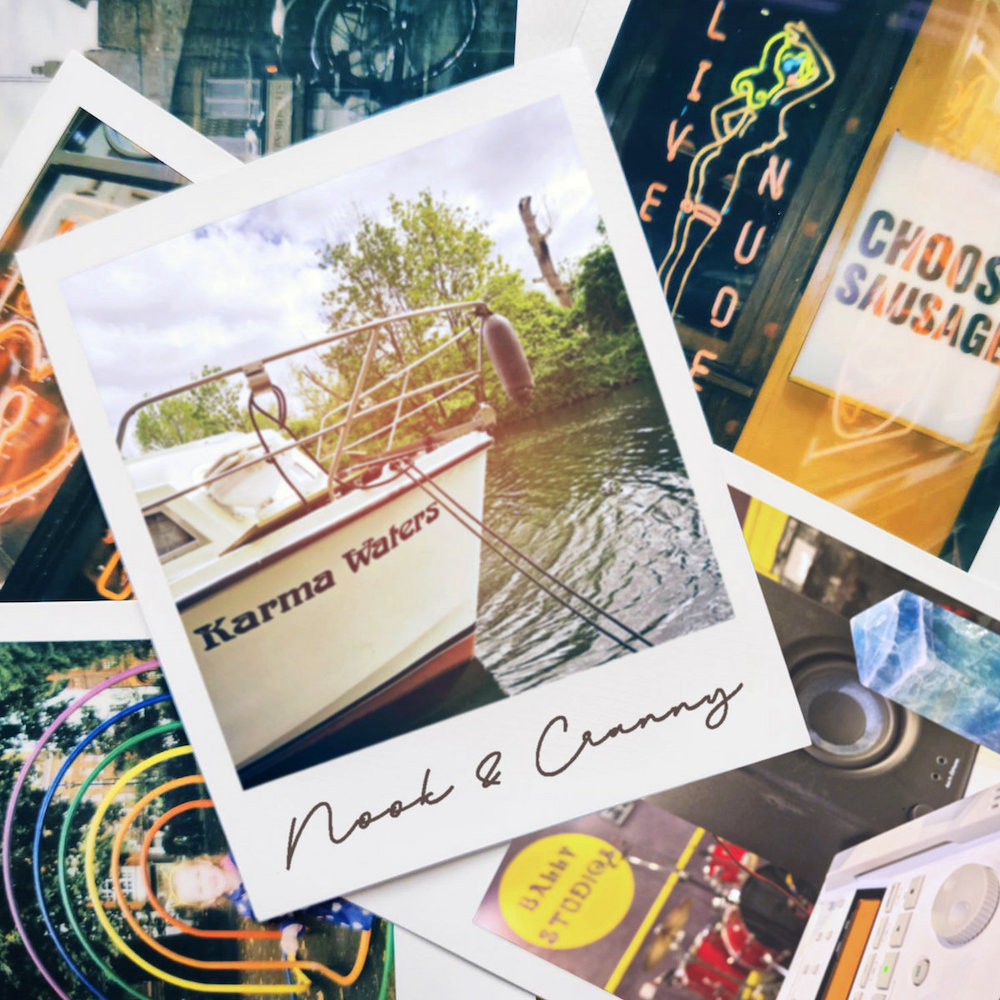
Nook & Cranny’s debut album Karma Waters lands quietly and quite confidently. Built upon improvisation and later shaped with restraint, the record values instinct, patience, and the trust between the duo that is Dean Cass and Matt Sullivan. They do not rush to impress. Instead, they let sound and time stretch and drift and slowly reveal their intentions.
Guitars and drums were captured live during unplanned jam sessions, and that spontaneity remains audible throughout. The playing breathes with rhythms bending rather than locking into rigid patterns, and the guitar unfolds like conversations instead of statements. Opener “We Choose To Go To The Moon” allows repetition to become momentum with subtle shifts in tone and pacing guiding one on a journey without force.
While the title track deepens the approach, it also allows for small musical decisions to carry weight. Be it through a change in drum emphasis or a guitar phrase that gently reframes the mood, the absence of vocals places focus on texture and movement never feels empty. Instead, the duo use space as a compositional tool by letting silence and restraint sharpen what follows.
Across the album there’s an influence of late 60s and early 70s progressive and space rock that is clear, but not cloned. These pieces favour gradual build over dramatic payoff by rewarding attention not demanding it. Songs lean into a fluid structure where themes surface, dissolve, and return altered. They echo the album’s fascination with time and motion.
The shortest track on the album, “Primitive Pistols”, acts as a pivot by injecting urgency before the record stretches outward again. By the time “Distant Galaxy” closes the album, the journey feels complete, not through resolution, but through acceptance of drift as destination.
By resisting excess and trusting improvisation as foundation rather than gimmick, Nook & Cranny have created a debut that values listening as much as playing. It is a record shaped by movement, memory, and the quiet confidence of musicians who know when to let the music lead.