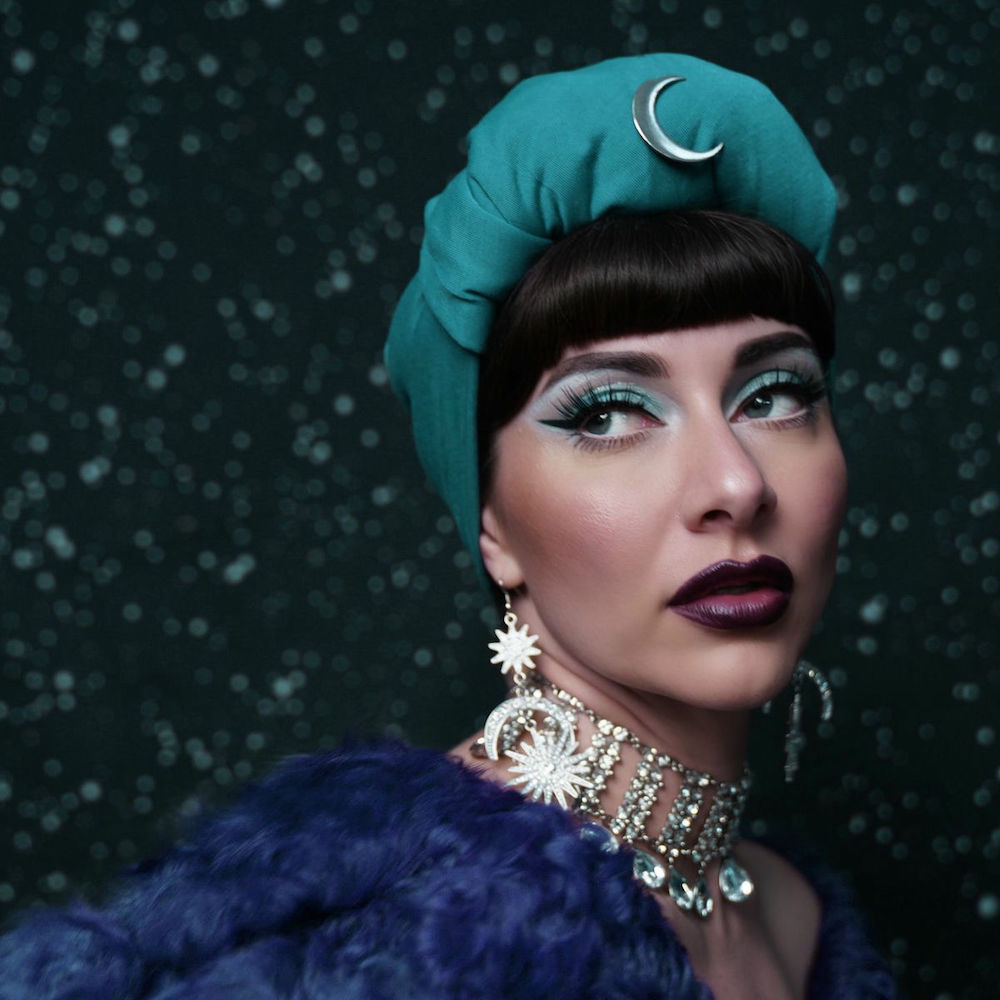
Back in the day, the young Boston duo of Amy Heidemann and Nick Noonan (they’d later marry) turned internet virality into a major-label moment as Karmin. With their sharp covers and bubblegum swagger caught the internet’s pulse at the exact right moment. It was the early 2010s when “going viral” still felt like magical alchemy and Karmin played the part perfectly. They were bright, fast, and engineered for instant replay, but that version of Amy smiling through syncopated hooks and bouncy pop-rap verses was merely the opening act.
Somewhere between Karmin’s debut EP Hello (2012), their final album Leo Rising (2016), the glossy pop machinery, and quiet burnout a transformation began. When Karmin faded, Qveen Herby didn’t immediately emerge in full witchy regalia.
She first arrived as a R&B powerhouse by stepping into a sound that was smoother, slower, and infinitely more self-possessed. That evolution set the foundation for what would come later…the mysticism, the ritual, the spell craft. Reborn not in the image of industry expectation but in her own mirror, Qveen Herby began as an artist chasing control through groove and confidence. The sonic shift was more than cosmetic. Gone were the pop palettes and YouTube-smooth edges and in their place came trap beats, R&B elegance, and a quiet sense of reclamation. Qveen Herby wasn’t just a new name it was the sound of someone awakening and learning to trust her own power.
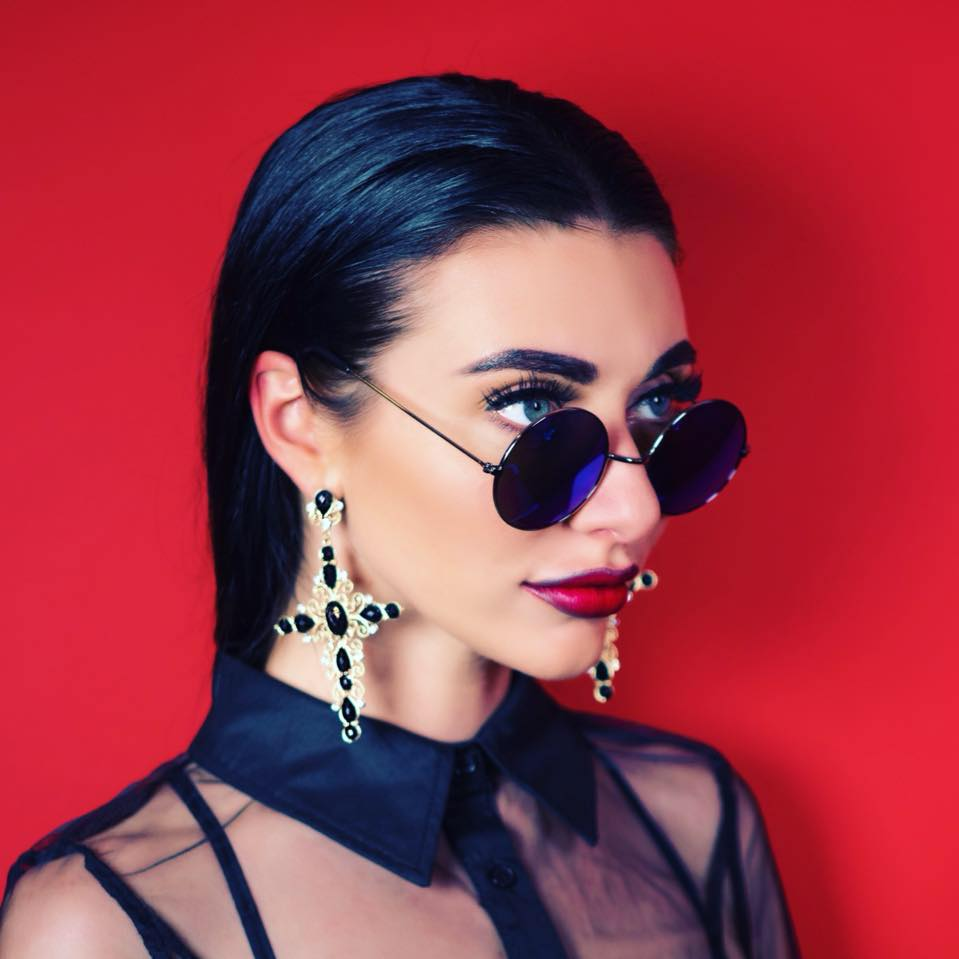
If Karmin side stepped identity, Qveen Herby defined it. Across EP 1 through EP 9, she built a universe grounded in self-mastery and glamour. One where manifestations steeped in incense smoke met 808s and affirmations hit like punchlines. These weren’t merely reinventions though, they were revelations. On tracks like “Busta Rhymes”, “Mint,” “Self Aware (featuring Durand Nernarr), Amy stepped fully into her Qveen era, rapping with the discipline of someone fluent in her own worth. The confidence was deliberate, the flow precise, and the energy was unmistakably hers. It wasn’t about chasing the stardom or the spotlight anymore. It was about owning the light in its entirety.
Once engineered for virality, her delivery evolved into something more supreme. The cadences sometimes slowed while the beats grew thicker, moodier, and more deliberate. She rapped like someone who no longer needed permission to fuse confidence and glamour with grit.
The Qveen persona became both a mask and liberation. It was a way to explore what pop music rarely allowed her, and most women to have. She was no longer just a pretty spectacle. It wasn’t rebellion against an industry that tried to box her in so much as a reclamation of who she always was…a woman with confidence that was forged in independence, creative control, and self-direction.
The sonic shift from Karmin’s infectious and sugary choruses to Qveen Herby’s smoke-and-silk minimalism might feel a bit startling but that friction is the allure and her brilliance. If Karmin was a mirrorball that scattered light in every direction, then Qveen Herby is the candle flame that centers it all. The sparkle remains, but it’s grounded now. Every hook feels intentional and every beat leaves room for breath, intention, and conviction.
While Karmin’s aesthetic leaned on retro pop gloss with red lipstick, pin curls, and Pinterest-ready charm, Qveen Herby emerged with the confidence of an R&B diva. Couture sleek edges, bold lips, and the kind of polished glamour that signaled control as much as it did style. Over time, that confidence evolved into something more ritualistic and stylized. One with tarot, divine geometry, and clean-lined mysticism replacing the diva imagery. In her single “RIP,” she declares, “R.I.P to the old me” and it’s a reminder that Qveen Herby’s evolution isn’t performative, but a conscious recognition of her own growth and truth. And with her latest single, “High Priestess”, Qveen Herby continues to reframe the gaze by turning self-presentation into self-awareness where the eyeliner has become the armour and the lyrics transform the song into a sacred space.
If Karmin was the ingénue trying to break through the noise, Qveen Herby is the architect of her own empire. Her visuals may be stripped down yet they are symbolically heavy and suggest she’s an artist who no longer performs for attention but creates because it resonates and reverberates with the inspiration of the Universe.
Even her online presence mirrors that intent with affirmations, humor, and a balance of glamour and groundedness. It’s not as much branding as it is a confident authorship.
Qveen Herby’s evolution isn’t confined to sound or visuals though. It extends into her lyrics as well. Karmin’s writing often relied on pop cleverness, and at first Qveen Herby carried R&B swagger and sensuality with verses focused on style, allure, and a playful self-confidence. Over time, that energy transformed into something more intentional. One of mantras, affirmations, and declarations of autonomy. Albums like The Muse and The Alchemist and songs like “5D”, “Magic”, “Hacky Sack”, “Daydreamer”, and “Lucky” sound like bravado or new age woo woo at first but they reveal themselves as modern invocations for self-sufficiency. The cleverness hasn’t vanished but it’s been retooled into intention and is a reflection of an artist learning to articulate her own growth, her own authority and her sense of self. It’s a bonus if she provides enlightenment, and she does to those that follow her, along the way.
This evolution of Qveen Herby, Amy’s higher self, reflects a larger movement toward autonomy and creative self-determination. Qveen Herby has redefined what it means to thrive on her own terms by blending mysticism, strategy, and intention. Empowerment in her world isn’t a slogan but a lived philosophy and a practice embedded in every lyric, visual, and beat.
What’s interesting though is that Amy as Qveen Herby has never truly abandoned Karmin’s DNA. The melodic instincts, the vocal agility, and the pop literacy remain but are reframed through a more intentional lens. What once felt like a performance now reads like a ritual. The smile has softened into serenity and the hooks have matured into hymns.
In an era obsessed with reinvention, Qveen Herby’s transformation is rare because it isn’t a pivot but a return. She didn’t shed her past, but she sure as hell transmuted it. The Karmin years were the spark, the experiment, and the necessary prologue. Qveen Herby is the flame that learned to sustain itself.
This isn’t just a story of artistic evolution. It’s a meditation on reclamation, on choosing self over spectacle, and on turning survival into ceremony. In the temple she’s built, Qveen Herby stands not as a product, but as a high priestess.
And for those who’ve followed her from viral fame to visionary independent goddess, the message is clear…ascension looks best when you light your own altar.